
Gilbert AZ Home Design Trends: What East Valley Homeowners Are Choosing
Gilbert AZ home design trends often bring together clean lines, warm color, natural materials, and rooms that work for everyday life. Rather than copying a finished look from a showroom, East Valley homeowners can use these ideas as a starting point and shape them around their home, light, routines, and long-term plans.
That distinction matters in a place where bright sunshine, indoor-outdoor living, and a wide mix of new builds and established homes all influence design decisions. The most useful trend is not a color or a furniture shape by itself. It is a considered approach: create a calm foundation, add texture and personality, and make practical choices that still feel good years from now. For a broader look at local residential design, explore Hermosa Style Co.'s East Valley interior design guide.
The Design Aesthetic That Defines Gilbert AZ Homes Right Now
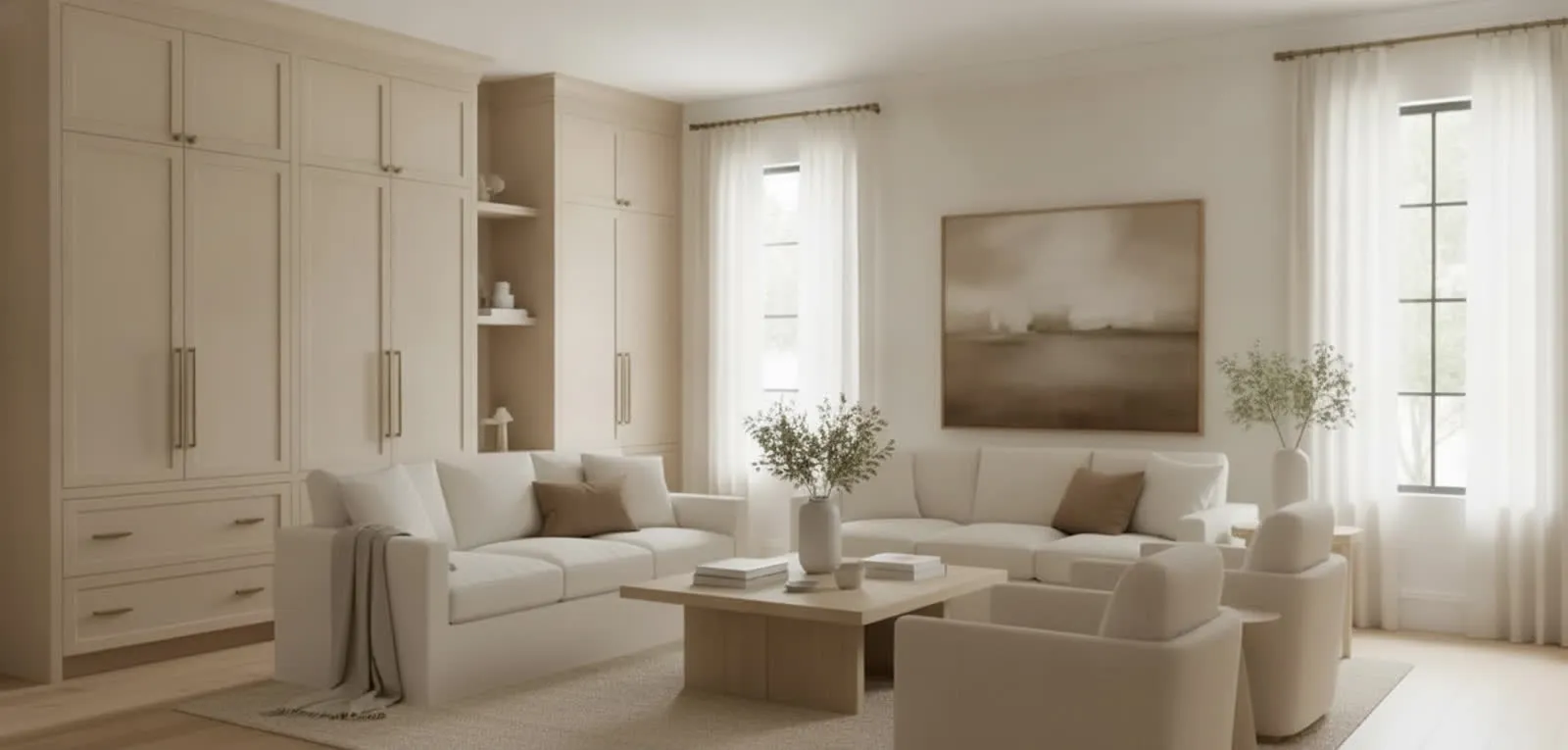
There is no single style that defines every home in Gilbert. Many interiors balance modern simplicity with warmth: uncluttered shapes, comfortable seating, natural finishes, and a restrained palette that does not feel stark. The result can be polished without feeling formal, and relaxed without looking unfinished.
That balance makes sense for homes used in many ways. A living room might need to feel composed when guests arrive but also comfortable for a quiet evening. A kitchen needs clear work surfaces and useful storage, while still connecting visually with dining and living areas. A bedroom should feel restful, not like a display set. Design decisions are strongest when they respond to those real uses first.
For a starting point, look at the fixed features in the home: flooring, cabinetry, counters, tile, and the direction of natural light. These are harder to change than cushions or artwork. A homeowner planning a renovation might choose a restrained base for the permanent elements, then bring in individual character through paint, lighting, textiles, and accessories. In a new build, making those choices early can help rooms feel related rather than assembled one purchase at a time.
Gilbert homes also vary in architecture, room size, and the way windows meet the sun. A design that works beautifully in one house may feel too cool, busy, or dark in another. Take cues from the house itself instead of asking a trend to dictate every decision. Notice ceiling height, sightlines between rooms, and how the main living areas connect to the outdoors. These architectural details can guide choices about furniture height, window treatments, and whether a room needs a stronger focal point. In an open layout, a repeated finish or color can create continuity, while a change in rug, lighting, or furniture arrangement can distinguish one activity from another without closing off the space. Hermosa's Gilbert homeowner guide offers more context on considering local design needs, while its full-service design overview explains how a comprehensive project can move from design planning toward completion.
Why Minimalism Is Winning in East Valley Interiors
Minimalism is appealing because it can make a room feel clear and settled. But a useful version is not an empty room or a ban on meaningful objects. It is a way to give each piece enough space to matter. The room still needs comfort, storage, lighting, and personal detail.
Start by noticing what interrupts the way you use a space. Is a walkway tight? Do frequently used items have no natural home? Is a side table covered because there is no storage nearby? These observations are more helpful than removing objects at random. A practical edit might mean keeping fewer pieces on a console, selecting a coffee table with a lower visual profile, or using closed storage to contain everyday clutter.
- Keep circulation clear.
Leave comfortable paths between a doorway, seating, and the next room. The arrangement should make movement feel natural.
- Choose furniture for the room.
Measure the space and note door swings, windows, and walkways before selecting a sofa or dining table.
- Use storage where things collect.
A basket beside a chair or a cabinet near an entry can be more useful than storage placed where it is rarely needed.
- Give focal points room.
A strong piece of art, a distinctive light, or an architectural feature can stand out when the surrounding surfaces are not crowded.
- Layer a few tactile details.
Linen, wood grain, wool, stone, and handmade-looking ceramics can make a reduced palette feel inviting.
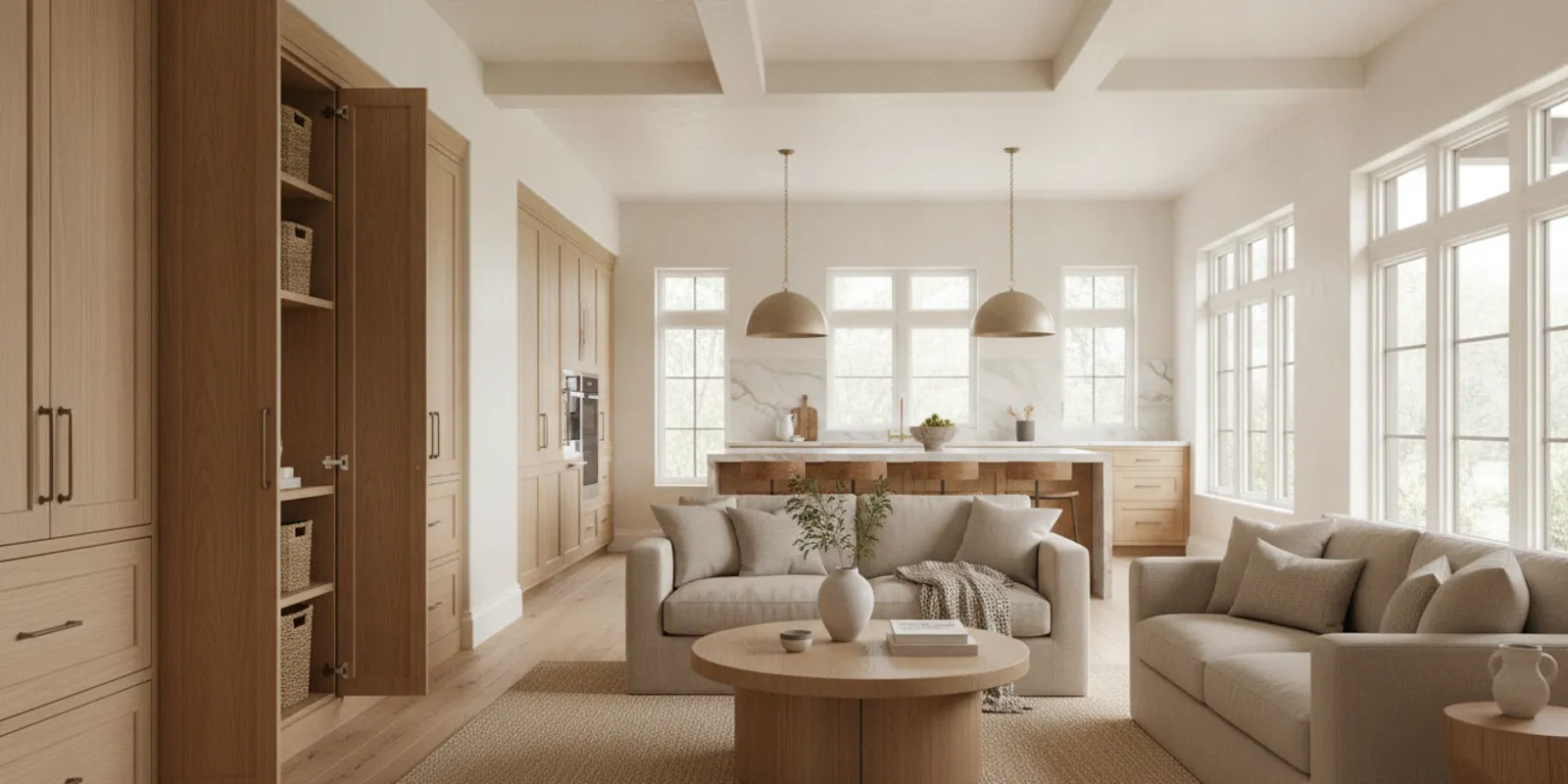
Minimalism can be especially helpful in open-plan rooms, where repeated visual clutter can make the whole space feel unsettled. Use a consistent palette across connected areas, then define functions with furniture, rugs, and lighting. A dining table can establish a dining zone without putting up a visual barrier. In a living area, a pair of lamps or a rug can make the seating feel intentional while preserving an open view.
Decluttering also has limits. If a room feels bare, the answer may be a more suitable rug size, warmer lighting, or better-scaled furnishings, rather than more small accessories. A thoughtful furnishing plan can help homeowners judge the full composition before buying every piece. Hermosa Style Co. describes its full-service and partial design options for people deciding how much design support fits their project.
Color Palettes That Work in Arizona Natural Light
Arizona sunlight can make color look different from the way it appears on a small paint chip or a screen. A soft beige may read yellow in one room; a cool gray may seem flat in another. The reliable approach is to test color where it will be used and observe it at different times of day before making a large commitment.
Desert-warm neutrals are a natural starting point for a calm interior: creamy white, sand, warm taupe, muted clay, and soft brown can sit comfortably beside natural wood and stone. These shades do not need to dominate every surface. A homeowner might use a quiet neutral on walls, a deeper tone on a cabinet or island, and a muted accent in fabric or art. Small contrasts keep a tonal room from blending into one flat field.
Consider these practical checks before settling on a palette:
- Look at fixed finishes first.
Identify undertones in existing flooring, tile, counters, and cabinetry. Choose nearby colors that work with them, rather than fighting them.
- Test in the actual room.
Place large samples on more than one wall. A color can appear different near a window, in a shaded corner, or beside a warm wood finish.
- Review morning and evening light.
Observe the sample at different times and with the lamps you expect to use. Do not rely on a single quick look.
- Check the palette together.
View paint, flooring, fabric, and hard-finish samples side by side. Individual choices can look appealing but clash when combined.
- Choose where contrast belongs.
Decide whether the room needs contrast in the cabinetry, furnishings, artwork, or smaller accents. Repeating every color everywhere can make a space feel busy.
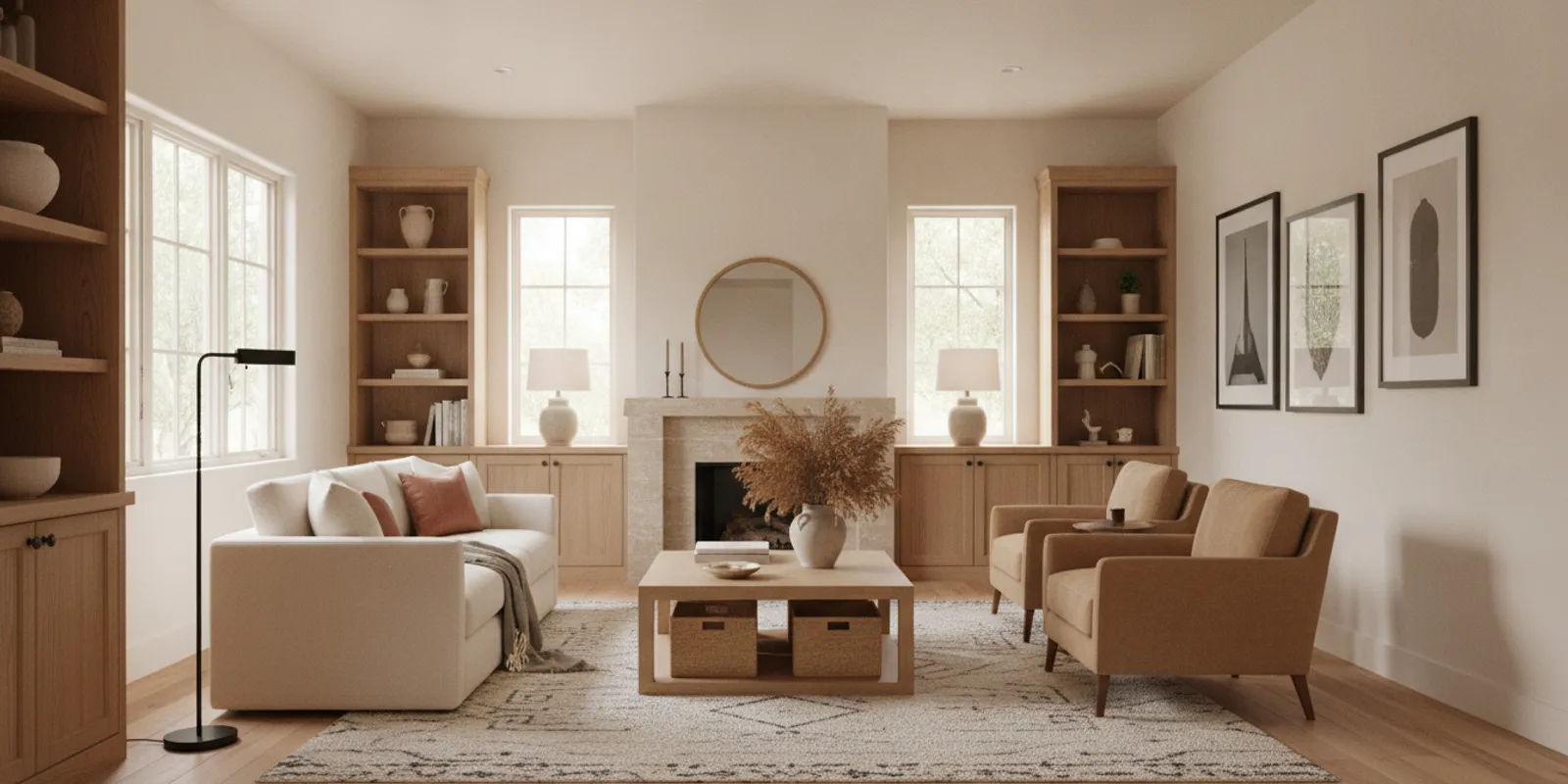
A useful palette has more than one value. Pair lighter walls with mid-tone upholstery or wood, then add one or two deeper notes for definition. Black or dark bronze details can sharpen a room with warm neutrals, while a muted green or clay shade can add color without taking over. The best choice depends on the home's finishes and the mood the homeowner wants to create.
Color is also a good place to make a room personal. If a favorite artwork includes a distinctive blue, for example, that shade might appear in one pillow, a ceramic piece, or a small painted surface rather than across every room. For professional help evaluating paint and finishes, see Hermosa Style Co.'s design services and interior design information. Park University's overview of color and material selection in interior design also describes how those choices contribute to a space's mood and style.
Furniture and Material Trends for Gilbert Homeowners
Furniture and materials can make a simple room feel considered. Rather than treating any one finish as a must-have, look for pieces that are comfortable, appropriately scaled, and compatible with the way the room is used. A classic silhouette with a current fabric, for example, can feel fresh without needing to be replaced when tastes change.
Natural textures bring depth to neutral rooms. Wood grain, woven fibers, stone, ceramic, and linen each reflect light differently and create contrast without relying on a strong color. Mixing finishes usually looks more natural than matching every surface exactly. The mix still needs a reason: repeat a wood tone, metal finish, or fabric texture in more than one place so the room feels connected.
Durability should be part of the design conversation, especially for pieces used every day. Think through who uses the room, whether pets or children are part of household life, and how often surfaces need cleaning. Ask about care instructions and fabric performance before ordering. A material can be beautiful and still be a poor fit for a particular routine.
Choice | What it can add | What to consider |
Natural wood | Warmth, visible grain, and a grounded feel | Compare undertones with floors and cabinetry; ask how the finish should be cared for. |
Stone or stone-look surfaces | Visual texture and a substantial focal point | Review samples in the room and ask about sealing, maintenance, and expected wear. |
Linen and woven textiles | Softness and subtle texture | Check cleaning needs, durability, and how the fabric filters light. |
Metal accents | Definition and a crisp contrast against warm finishes | Limit the number of competing finishes and repeat the chosen tone thoughtfully. |
Performance upholstery | Everyday practicality in frequently used seating | Confirm care instructions, feel, and appearance; performance labels do not remove the need for proper care. |
Furniture scale often matters more than a particular trend. Before ordering, measure the room and map the intended arrangement. Include space to walk around a dining chair when it is pulled out, and check that a sofa does not block a window or a path to another room. Painter's tape on the floor can help you visualize a proposed footprint. If the room has unusual dimensions, a measured plan can prevent expensive guesswork. Measure more than the furniture's width and depth: note seat height, arm height, and the distance between a coffee table and sofa. Check the route from the front door to the room as well, including tight turns and stairways. A piece that fits its final location may still be difficult to bring inside. For a dining area, leave enough clearance for chairs to move in and out without interrupting the main path. These simple checks are less exciting than choosing a finish, but they help make sure the finished room is comfortable to use.
Think about lighting alongside furnishings and finishes. A room needs useful general light, but task and accent lighting can make it easier to read, cook, or unwind. A pendant above a table, a lamp beside a reading chair, and discreet lighting near a work surface each serve a different purpose. Select fixtures with the room's scale and finish palette in mind, and check that the light feels comfortable at night as well as during the day.
In kitchens and bathrooms, function and finish decisions are closely linked. A cabinet color, counter, hardware, and backsplash should be reviewed together rather than one at a time. Homeowners planning kitchen work can review Hermosa's kitchen renovation information and its cabinet design and shop page as they organize their questions and selections. For a larger scope, the home renovation overview provides another place to understand the company's project focus.
How to Bring a Timeless Look to Your Gilbert Home
A timeless room is not one that avoids all personality. It is a room where the major decisions work together and the most expensive-to-change elements are not tied too tightly to a short-lived look. Personal touches can then evolve as household needs and tastes change.
- Write down how the room needs to work.
List the activities, storage needs, and people who use it. Identify what is not working today before shopping for solutions.
- Record the fixed conditions.
Measure the room, note the windows and doors, and document the finishes that will stay. Photograph the space in daylight and after dark.
- Set the visual direction.
Choose a small group of colors and materials that suit the architecture and connect with adjacent rooms. Keep samples together so you can assess the whole palette.
- Prioritize the largest decisions.
Plan the layout and select key furnishings before spending heavily on small décor. Verify dimensions, delivery details, and care requirements.
- Add personal details gradually.
Use art, pillows, books, and accessories to bring in character. Pause before purchasing duplicates or items that do not have a clear place.
If a project includes several rooms or a renovation, decisions can affect each other. A flooring choice influences cabinet and paint colors; the furniture plan affects outlet placement and lighting; a change in one room can alter how an open-plan area reads as a whole. Write down key selections and decisions so the homeowner and project team are working from the same information. When contractors are involved, clear design documentation and coordination can help connect the intended design with the execution. Hermosa Style Co. explains its five-step interior design process, from discovery through installation.
It is also reasonable to phase a project. Start with decisions that affect function or later work, then plan furnishings and finishing touches around the budget and priorities. A phased approach should still have an overall direction, so purchases made now remain compatible with what may come later. A professional can help distinguish between decisions that need to be settled early and those that can wait.
For local design inspiration, browse Hermosa Style Co.'s project gallery and guide to what to expect from a design consultation. Use images to identify what you respond to—perhaps a warm palette, a calmer arrangement, or a particular mix of materials—rather than trying to reproduce someone else's home exactly.
Frequently Asked Questions
What colors work well in a Gilbert home?
There is no universal palette for every Gilbert home. Warm whites, sand, taupe, muted clay, and natural wood can create a desert-inspired foundation, but light, existing finishes, and personal preference all affect the result. Test paint and finish samples in the actual room at different times of day.
Does minimalism mean getting rid of personal items?
No. A practical minimalist approach keeps what is useful or meaningful and gives it room to be noticed. Clear circulation, suitable storage, and fewer competing visual elements can make a home feel calmer without removing the personal details that make it yours.
How can I make trend-led choices last longer?
Use lasting materials and adaptable colors for major elements, then bring in more changeable trends through art, textiles, and accessories. Consider function, care, and scale before buying, and choose pieces that work with the home's architecture and the way you live.
When should I involve an interior designer?
Consider design support when you are planning several connected rooms, choosing finishes for a new build or renovation, furnishing a space, or trying to resolve layout and selection decisions. An early conversation can help clarify the scope and the decisions that need attention first.
The best Gilbert home design choices bring together the house itself, the Arizona light, and the way the people who live there want to feel and function every day. Start with a clear plan, then layer in the materials, color, and details that make the result distinctly yours.
Comments