
Interior Design Materials: What to Compare
The best way to choose interior design materials is to see them before you buy. A small chip in a shop can look perfect and still stain, scratch, or clash once it is in your house. Take the sample home, set it where it will live, and check how it wears, how it looks, how you clean it, and whether it fits the rest of the plan.
That is the whole idea. You should not have to guess from a photo. You should be able to touch the finish, hold it in your own light, and say yes only after you have seen it next to the other pieces. Then those notes stay with the design, so the order matches what you approved.
Book a discovery call to look at materials for your project. For a new project, you can also call the sales team at (480) 712-2008.
What should you look at first?
Start with the job the surface has to do, not the sample you liked first. A kitchen counter, a hallway floor, and a bedroom chair live very different lives. Write down traffic, water, food, sun, and who uses the room. Then judge each option on four simple things.
- Wear.
Can it take the use this room really gets, including kids, pets, cooking, and daily cleaning?
- Look.
Does the color and texture still look right in your daylight and evening light, next to the other finishes?
- Care.
What does normal cleaning look like, and will your household actually do it?
- Fit.
Does it work with the approved design, the budget, and the wait time, or does it force a change somewhere else?
That order keeps a pretty sample from winning a room it cannot serve. Hermosa Style Co is a full-service design and project team based in Gilbert. The team walks homeowners through this during design concept, when boards are built for each room, and again at final design, before anything is purchased. You see the materials first. Buying comes later.
How do you see interior design materials before you buy?
Ask for a sample you can take home. A photo, a website swatch, and a tiny chip are not enough. Stone, wood, tile, fabric, and metal all change once they leave the shop.
Put the sample in the real spot. A counter sample belongs on the counter. A floor sample belongs on the floor, near the door if that is where shoes land. A fabric belongs on the chair, in the sun that hits that seat. Look in the morning and again at night. Arizona daylight is strong, and evening light in a Gilbert or East Valley home is often warmer than the shop.
Then line the samples up the way they will meet in the room. Hold the stone next to the cabinet color, the floor, and the metal you already like. One finish can look calm alone and busy next to two others. If you want a quiet room, say so out loud while you are looking.
Natural materials vary. Two slabs with the same name can look different, and two fabric lots can shift. Look at a full slab or a large memo, not a two-inch chip, and say how much change you will accept. If you want an even look, a busy stone or a wild wood grain will fight that goal no matter how much you like the small piece.
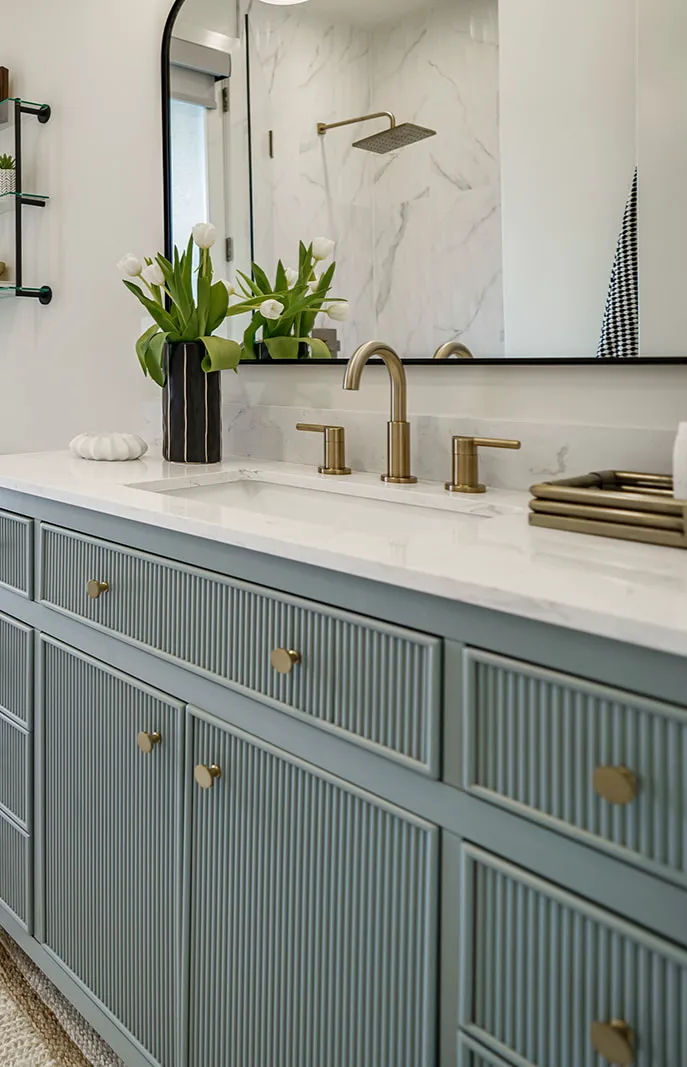
A single counter brings stone, metal, and painted wood into one view. Judge them together, in the room's light, not as separate samples.
How do you judge wear for the way you live?
Wear is not one score. A surface can be hard and still mark from lemon juice. A softer one can still be right for a quiet bedroom. Match the test to the room.
On floors, think about grit from the door, chair legs, and wet feet. Wood can be refinished later, which helps in a home you plan to keep. Tile and stone handle water better, but the grout and the stone finish still need a care plan. On counters, heat, knives, and standing water matter more than foot traffic. On chairs and sofas, rubs, spills, and sun fade matter more than either.
Ask plain questions. Will this stain if I spill coffee? Can a scratch be fixed, or does the whole piece have to be replaced? What happens with kids, pets, or a wet towel left on the counter? A shop label is not a promise for your house. Seeing the sample, and hearing what repair looks like, is better than guessing from a photo.
Repair is part of wear in a home you intend to stay in. Many people remodel so they can stay and have the house reflect them. A finish you can touch up later often beats a finish that looks perfect for a month and then has to be thrown out.
How should the look be checked in your own light?
Samples lie when you only see them in a showroom. The same stone can look cool and gray at noon and cream after dinner. Paint does this too. A color that feels soft in the shop can look stark on a big wall at home.
Bring the sample home and leave it there for a day if you can. Check it with the lights you actually use, not just the window. Hold it next to the pieces that will touch it. A dull stone looks softer and shows less shine. A shiny stone looks deeper and will mirror windows and lights. Flat paint hides small marks better than a shiny paint, which is why paint belongs with the other materials, not after them. If color is still open, the notes in our interior paint colors guide are a useful companion, not a substitute for looking at the hard surfaces.
Also check the finish, not just the color. A living metal can tarnish or show fingerprints. A coated metal stays more even. Neither is wrong. You just need to see which one you want before it is on every cabinet.
What does care actually look like?
A material you will not take care of is the wrong material, even if it is beautiful. Write the care in plain language before you approve it.
Sealed stone often wants a gentle cleaner and a reseal on a schedule the maker should name. Some man-made counters wipe with soap and water and dislike harsh scrubbers. Some fabrics blot with water. A delicate weave may need a pro. Wood floors usually want felt pads and a damp mop, not a soaking one. Outdoor pieces in the desert need a plan for sun and dust, not just rain.
If the care list is longer than you will follow, choose the simpler option. Or keep the fussy finish in a place you see and enjoy, not on the busiest work surface. Hermosa's boards are meant to make that tradeoff visible while there is still time to change it. Extra changes after final design are billed hourly, so the care talk belongs in the review, not after the order.
Products used indoors can also affect the air you live with. The EPA's overview of volatile organic compounds explains that paints, finishes, and furnishings can release these compounds, and that levels are often higher indoors than outdoors. Ask what is in the finish and whether it needs to air out. That is a product question for your supplier, not a reason to assume every "natural" label is gentler.
How do common materials compare?
The table below is a starting point, not a rule. Real products inside each family differ. The right choice depends on the room, the finish, and how the piece is made. Use it to decide what to ask, then confirm with samples you can see before you buy.
Material | Where it often works | Watch for | Daily care |
Wood. | Floors, cabinets, and furniture. | Sun fade, water rings, and dents. | Use pads, wipe spills, and plan on later touch-up. |
Natural stone. | Counters, floors, and feature walls. | Marks from acid, stains, and big differences between slabs. | Seal when told to, and skip lemon and vinegar on marble. |
Quartz. | Kitchen and bath counters. | Heat limits and visible seams. | Clean with soap and water, not harsh scrubbers. |
Tile. | Floors, showers, and backsplashes. | Grout color and slip in wet rooms. | Sweep often and use a cleaner that suits the grout. |
Tough fabric. | Family seating and dining chairs. | Shine, pilling, and heat near windows. | Blot spills quickly and follow the cleaning note. |
Natural fabric. | Drapes, quiet seating, and rugs. | Sun, stains, and rugs that crush. | Expect gentler cleaning. Confirm it before you commit. |
Metal. | Faucets, pulls, and lighting. | Finishes that tarnish or show fingerprints. | Use a soft cloth. Skip scratchy polish on a coating. |
If you are drawn to wood, stone, clay, or plant fibers as the main story of the house, that is a narrower choice than this list. Keep this page for the side-by-side questions. Treat a natural-materials plan as its own talk about variation and care.
How do you test fit against the design plan?
A material can pass every wear test and still be wrong for the project. Fit means it belongs with the other choices you have already made.
Check four practical points:
- The look of the whole room.
One strong stone, one metal tone, and a quiet cabinet color is easier to live with than three patterns fighting. Lay the samples in a row the way they will meet.
- How it is built.
Thickness, edge, slab size, and how the piece meets the next material decide whether it looks finished. A beautiful stone with a clumsy seam still reads as unfinished.
- The budget and the timing.
The price on a sample is not the installed price. Add cutting, waste, the base it sits on, delivery, and install. A long wait can also push a project you hoped to finish in a certain season. Planning can start well before the year you want to be done. It does not have to be a one-month rush.
- The way you want the house to feel.
If a trend sample does not feel like your home, it does not fit, even if it is tough.
Hermosa's process is built for that order. Discovery sets scope and budget, including a look at the real rooms at home. Design concept brings boards back about two weeks later, with one round of changes. Final design is the approval. Only then does buying begin. If you want the longer view of those stages, the interior design process steps spell them out. This article stays on the material questions inside that path.
Cost belongs in the same conversation. Our guide to budgeting for interior design breaks a project down by room so a counter or a floor does not quietly take the whole allowance. An average project value around $15,000 is a planning benchmark for this studio, not a quote. Your scope, finishes, and trades set the real number. When price or timing is the worry, ask how a written plan, and options such as paying in installments, can spread the work instead of rushing it.
When should choices move into buying?
Comparing materials is the decision. Interior design procurement is what happens after those choices are approved. It means ordering the products, working with the vendors, and keeping deliveries lined up with install. Mixing the two is how people end up with a slab that does not match the sample they saw, or a fabric that arrives in the wrong lot.
Before a choice is ready to order, you should be able to name:
The exact product, finish, and color, not just the family it belongs to.
The room and the use you judged it for.
The care you accepted.
The edge, size, or detail that has to be made.
The wait time, and what happens if that item is delayed.
Hermosa buys the products and materials in the final design as its own step, then installs and styles them, often over one to three days depending on scope. That handoff is smoother when the notes travel with the board. You already saw the samples. The order should match them. If you are still choosing who should hold that work, the difference between full-service and partial interior design is worth reading. Full service here includes design, buying, and the trades. Partial support stops earlier and leaves more of the buying to you.
Kitchen surfaces are a good example of why the handoff matters. A counter, a backsplash, cabinet paint, and a faucet all have to be chosen against one another, then ordered so they arrive together. The kitchen renovator in Gilbert page is the place for that project type. This guide stays with the comparison you can use in any room.
How can you get ready before a design meeting?
You do not need a finished plan to have a useful meeting. You need a short record of how you live and what you have already ruled out.
Photograph the rooms in daylight and at night, including the floors and the windows.
Note what fails now: a counter that stains, a fabric that shows every crumb, a floor that scuffs by the door.
Bring two or three samples you like and one you know you do not, so the direction is clearer.
Say what you will and will not clean.
Name the rooms that must be done together so finishes do not drift.
A design brief is the right home for those notes. If you want a simple structure, see what an interior design brief should include. Hermosa uses the discovery visit to add facts you cannot see in a photo, including floor-plan scans, so the boards that come back are tied to the real house.
Busy households should be blunt about wear. If weeknights mean homework at the island and dogs at the door, choose the tougher option for those surfaces and save the delicate finish for a quieter room. The ideas in interior design for busy families pair well with this comparison. They do not replace looking at the actual product.
You can see how mixed materials read in finished rooms in the project gallery. Look for how stone, wood, paint, and metal sit together, not for a single product to copy. Your light, your budget, and your habits will change the answer.
What should you ask before you say yes?
Use this list in a showroom or in a design review. If someone cannot answer, do not treat the sample as decided. The point is to see the material and understand it before you buy.
What is this made of, and what is the finish called?
Where does it work, and where is it a poor idea?
How does it handle water, heat, sun, and scratches in that use?
What does cleaning look like in a normal week?
Can it be repaired, or only replaced?
How much will this slab, fabric lot, or board differ from the sample I am holding?
What is the wait time, and what is the installed cost, not just the price on the tag?
What has to be decided now so the rest of the room still works?
Those questions are the whole method. Wear, look, care, and fit. Once they are answered, and you have seen the samples in your own rooms, the choice is ready for the design plan, and the plan is ready for buying.
Frequently asked questions
What are interior design materials?
They are the surfaces and products that build the room: flooring, counters, tile, cabinets, paint, fabric, rugs, hardware, and fixtures. Comparing them means judging how each one wears, looks, and has to be cleaned in your house, not only how it looks on a board.
Can I see materials before I buy them?
Yes. Ask for samples and look at them at home, in the real light, next to the other finishes. Approve the exact product only after you have seen it. Ordering from a photo is how the delivered piece drifts from what you thought you chose.
Should I choose materials before or after the layout?
Decide how the room works first. Traffic, water, and storage change what a surface must survive. Samples can start early, but approve them against the layout and the other finishes, not on their own.
How many materials should one room use?
Enough to give contrast, not so many that nothing repeats. A practical test is whether you can name each one and say why it is there. If you cannot, simplify before you order.
Do I need a designer to compare materials?
You can run the comparison yourself with samples and care notes. A designer helps when many finishes have to agree, when the build details matter, or when you want the approved list bought and installed as one plan. Hermosa does that as part of full-service design, after a discovery call.
Book a discovery call when you want those comparisons made against your own rooms, with samples you can see before you buy. You can also read how interior design procurement works once the choices are ready to order, or call the new-project sales line at (480) 712-2008.
Comments