
Natural Materials Interior Design: The First Decisions to Make
Natural materials interior design is about more than choosing wood, stone, or woven accents. Start by deciding how a room needs to work, then compare materials that suit those routines and the look you want. A little planning helps you weigh texture, maintenance, durability, sourcing details, and cost before a selection affects the rest of a project.
What counts as a natural material?
Natural materials come from sources such as trees, stone, plants, or animal fibers. Common examples in interiors include solid wood and wood veneer, stone, clay, cotton, linen, wool, jute, rattan, and cork. Some finished products combine natural and manufactured components, so ask what a particular product contains instead of relying on a broad label.
“Natural” does not automatically mean durable, low-maintenance, sustainable, or right for every room. A porous stone may need more care than a sealed surface. A plant-fiber rug may suit a dry, low-traffic space but be less convenient where spills are frequent. The specific product, finish, installation, and care instructions all matter. For an overview of how design decisions can fit into a larger home project, explore Hermosa Style Co’s interior design services.
What should you decide before choosing materials?
Begin with the room’s real use. List the people, activities, and objects it needs to support. A family kitchen, a quiet reading corner, and a guest bathroom place different demands on surfaces and furnishings. A sample that looks beautiful on a showroom counter may not be the right choice for the way you live.
- Use:
Note traffic, food preparation, pets, children, moisture, direct sunlight, and the activities that happen in the space.
- Care:
Decide how often you are willing to clean, seal, condition, or protect a finish. Consider whether specialist care is practical for your household.
- Feel:
Consider whether you prefer a smooth, cool surface, a soft textile, visible grain, or a more tactile finish.
- Visual character:
Identify the color range, pattern scale, and amount of natural variation that feels comfortable.
- Project scope:
Separate items that are easy to replace from fixed surfaces that affect other decisions, such as cabinetry, flooring, or countertops.
- Budget priorities:
Decide where you want a material to be a focal point and where a simpler, more practical choice can do the job.
Keep a short priority list for each room. You might put easy cleaning first in a kitchen, softness underfoot first in a bedroom, and a quiet matte finish first in a living area. That makes comparisons more useful than choosing each sample in isolation. Write down household needs, too, such as easy laundering, a preference for low-texture surfaces, or concerns about particular finishes.
It can help to turn those priorities into a concise project brief. Note what you want a room to feel like, what it must accommodate, and what you already know you do not want. A practical interior design brief gives a designer or supplier useful context and helps keep later choices connected to your original goals.
How do common natural materials compare?
Use the table as a starting point, not as a product specification. Performance depends on the exact material, construction, finish, location, installation, and care. Ask the supplier or installer to confirm the details for the specific product you are considering.
Material | Where it may work | Questions to check |
Wood | Cabinetry, furniture, floors, trim | Which species and finish? How may sunlight, moisture, or scratches affect it? |
Stone | Countertops, floors, fireplace surrounds, accents | How porous is it? Does it need sealing? What cleaners are suitable? |
Linen or cotton | Window treatments, bedding, upholstery, cushions | How does the fabric handle fading, wrinkles, cleaning, and everyday spills? |
Wool | Rugs, upholstery, throws | What are the texture, shedding, and cleaning requirements? |
Jute or other plant fibers | Rugs, baskets, decorative accents | How will it respond to moisture, stains, roughness, and frequent traffic? |
Cork | Some flooring and accent applications | What finish and moisture protection are specified? How might furniture affect it? |
Clay or ceramic | Tile and decorative objects | What are the glaze, grout, slip, cleaning, and variation considerations? |
Request samples and written care guidance for each finalist. Look at samples in the room at different times of day; daylight and nearby finishes can change how color and texture appear. Place the samples beside one another and against adjacent materials instead of judging each on its own. A small tile or wood sample can help you assess tone and touch, but it may not show the full variation of a large slab, broad floor, or handmade batch.
Record the product name, finish, supplier, sample date, and open questions. If a selection is approved later, save the final product information and care instructions with the project records. That small habit can make repairs, replacements, and future decisions easier.
How can you balance color, texture, and pattern?
A room can include several natural materials without feeling busy when they have a clear relationship. Begin with a small palette, then vary texture and scale. For example, a wood floor, a softly textured linen sofa, and a stone side table can feel cohesive when their undertones work together and no single pattern dominates.
Choose one or two main materials to carry through the room.
Use contrast with purpose: smooth against textured, light against dark, or matte beside a controlled sheen.
Compare undertones. Warm wood and cool stone can work together, but the transition should feel intentional.
Repeat a color, texture, or finish in more than one place to connect separate elements.
Leave visual breathing room. Not every surface needs prominent grain or pattern.
Consider scale: a strongly veined stone may need quieter neighboring surfaces, while a subtle wood grain can pair with a more expressive textile.
Variation is part of the appeal of many natural materials. Wood grain, stone veining, and handmade tile can differ from one sample to another. Ask how much variation to expect and whether pieces will be selected, blended, or installed in a particular sequence. A finished room is easier to imagine when you understand what the sample represents. You can also browse the project gallery for examples of how materials, color, and texture can work together in completed interiors.
What should you consider room by room?
Kitchens
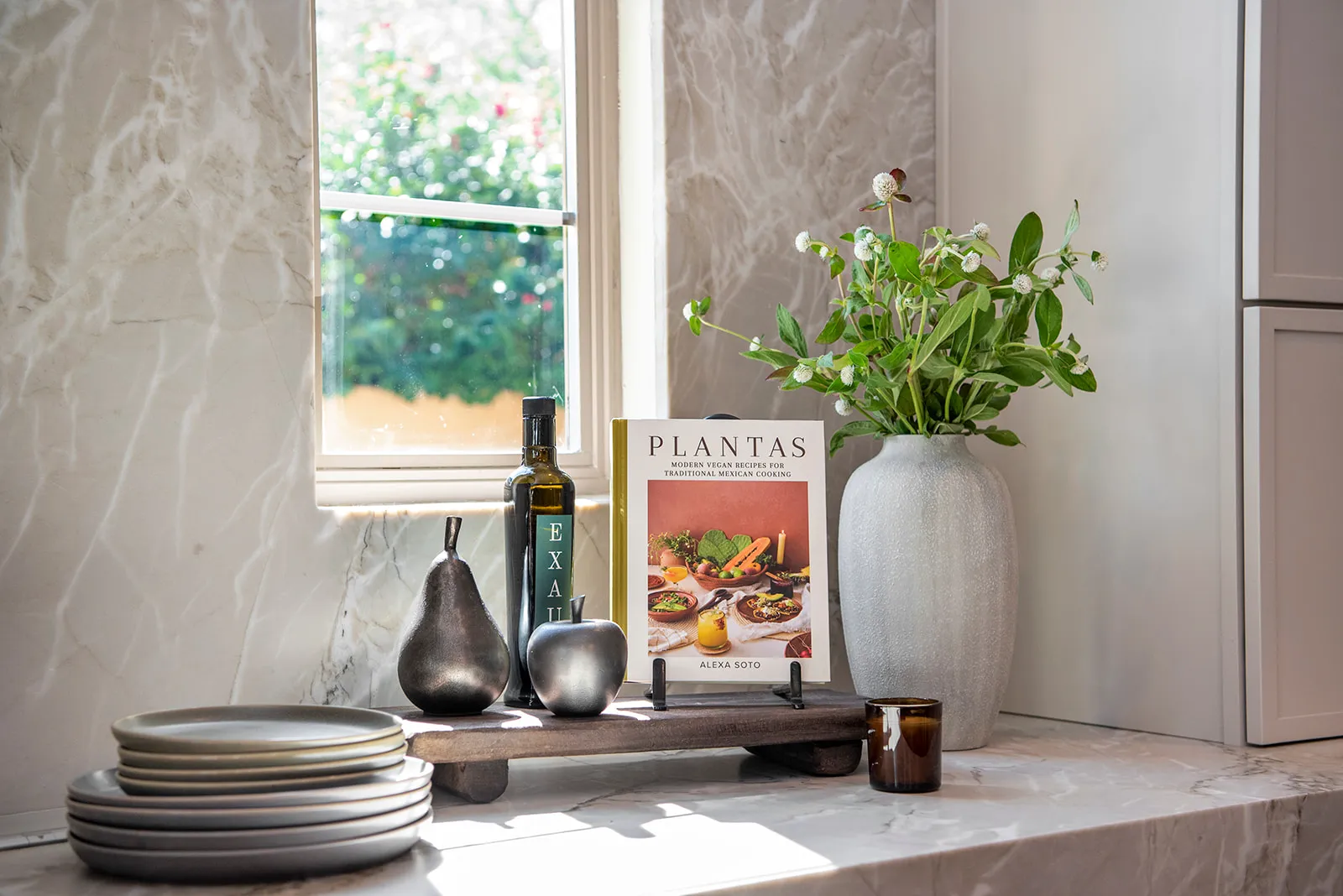
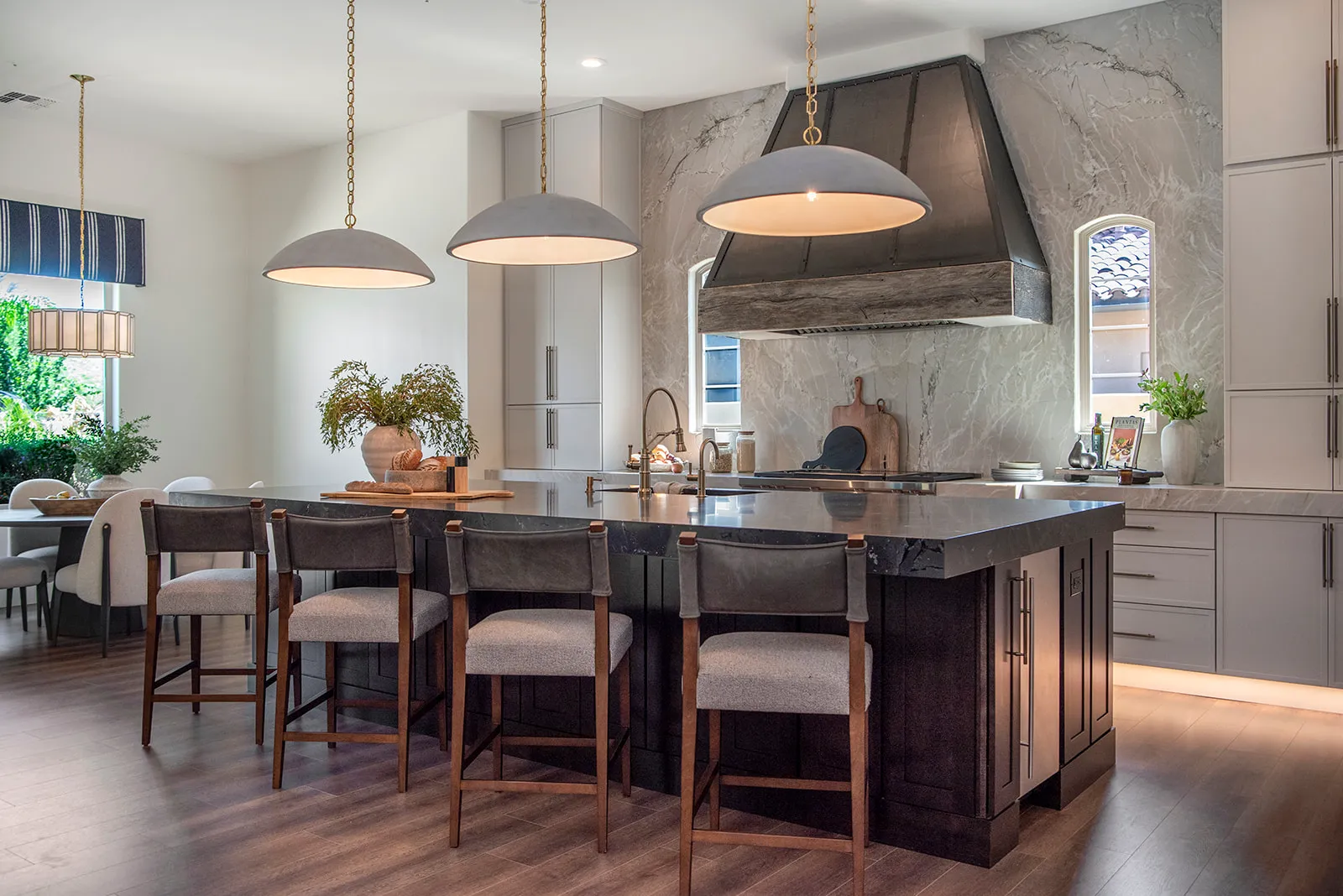
In a kitchen, match each surface to the tasks around it. Think about spills, heat, food preparation, and how your household cleans. Compare countertop samples with cabinet finishes, flooring, and hardware under the same light. Ask suppliers about sealing, suitable cleaners, stain response, and repair options. If you are planning a larger update, the kitchen renovation design guide can help you consider material choices alongside the wider plan.
Consider where a material will be used, not just whether you like it in general. A textured finish may be appealing on a backsplash but require more attention around food preparation. A particular wood finish may look right on cabinetry but need a different approach on a heavily used tabletop. Ask for guidance on the exact product and its intended location.
Bathrooms
Moisture and frequent cleaning make bathroom selection especially practical. Confirm that each proposed material is appropriate for its exact location, including wet zones and floors. Discuss slip characteristics, grout, ventilation, and maintenance with the product supplier and installer. A natural look can come from a restrained palette and tactile accents rather than from using a porous material everywhere. Keep the intended location clear when requesting advice: a material suitable for a vanity accent may not be suitable for a shower floor.
Living and dining spaces
Think about traffic paths, seating, sunlight, and meals. A rug’s fiber and weave affect how it feels and how it handles regular use. Upholstery should suit the household’s cleaning habits. Wood furniture and stone accents can create contrast, but use samples to check scale and tone before committing. If meals often happen in the space, ask how the fabric or rug responds to ordinary spills and what cleaning method is recommended.
Plan the relationship between large surfaces and smaller accents. A substantial stone table or strongly patterned rug may become the visual anchor; smaller items can then support it without competing. For ideas on coordinating different shapes, materials, and finishes, see how to mix furniture styles.
Bedrooms
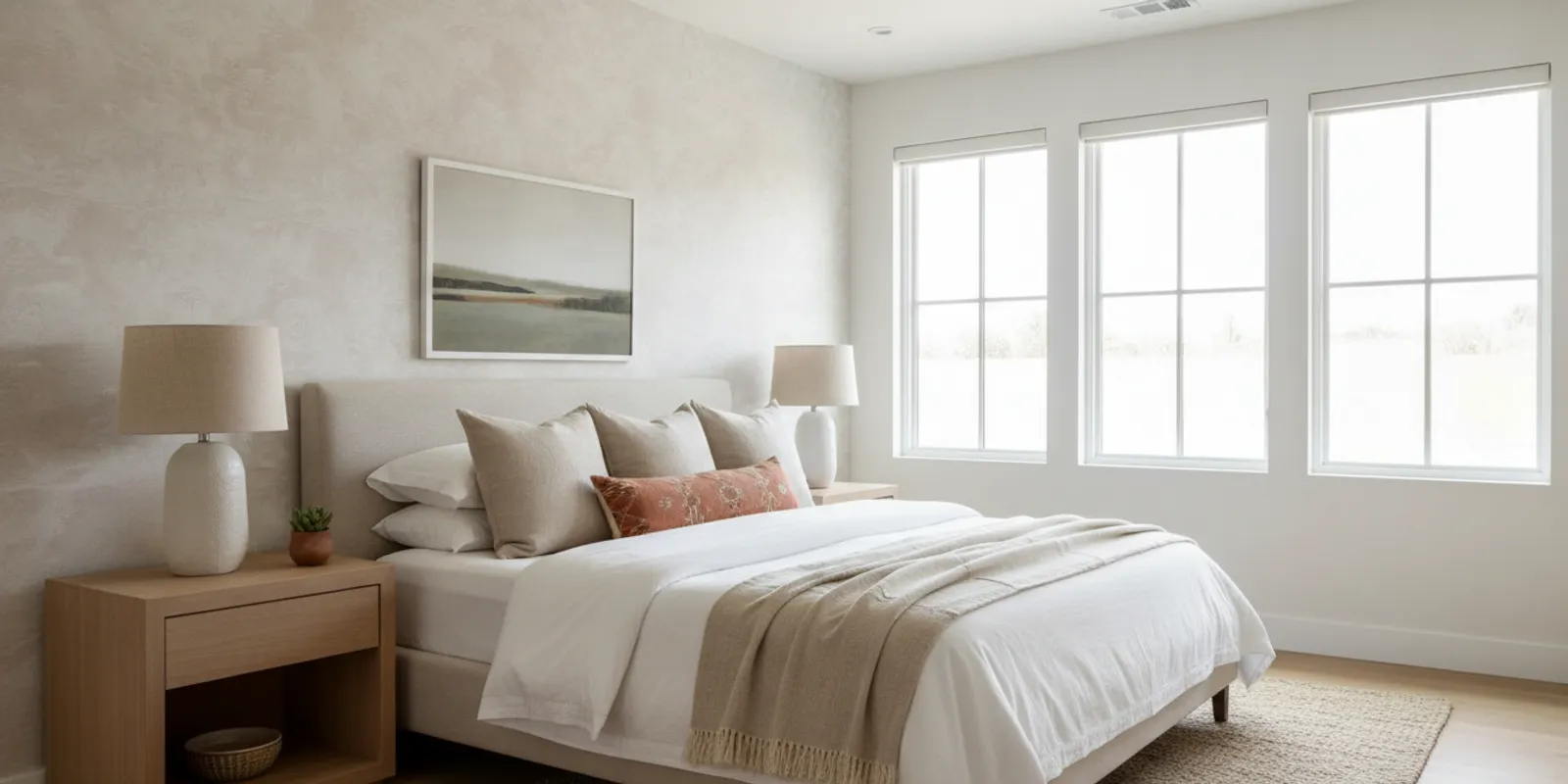
Bedrooms often benefit from softer materials and a calm palette. Consider bedding, window coverings, rugs, and furniture as a group. If easy laundering matters, inspect fabric samples and care labels rather than assuming a fiber will perform a certain way. Window coverings also affect how daylight reaches nearby floors and furnishings, so assess samples in the room rather than under showroom lighting alone.
Work and supporting spaces
Home offices, entries, and circulation areas have their own requirements. In an office, consider the feel of a desk surface, the placement of lighting, and whether a chair or storage piece will mark the floor. In an entry, consider dirt, moisture brought in from outdoors, and how often the floor or rug will need attention. The space-planning guide can help you think about how people move through a room before you settle on the materials and furnishings.
How do you compare materials before committing?
Use a simple selection sequence so each choice answers a real need. It is easy to collect attractive samples; it is more useful to understand how each option fits the room, the project scope, and neighboring finishes.
- Set the use case.
Write down the room conditions and the job the material must do. Include traffic, moisture, sunlight, and household routines.
- Choose your priorities.
Rank the needs that matter most in that location, such as easy care, a particular feel, or a consistent color.
- Shortlist realistic options.
Compare a few materials that fit the use and visual direction, rather than every available choice.
- Check product details.
Confirm composition, finish, dimensions, maintenance, and limitations directly with the supplier.
- Review samples in place.
View them beside adjacent materials in daylight and evening light. If possible, ask how the sample relates to the full product or batch.
- Discuss the complete scope.
Include installation, preparation, edge or seam details, transitions, and any relevant product requirements in the planning conversation.
- Keep a record.
Save approved selections and care instructions so the household can maintain them later.
A comparison sheet can include columns for appearance, practical fit, maintenance, cost information from the supplier, and open questions. For instance, one stone option may be your favorite visually but require more upkeep than you want. A wood finish may fit your palette and be easier to touch up, while showing marks from daily use. There is no universal winner. The point is to make trade-offs visible before a decision affects connected selections.
Care guidance matters as much as the initial look. Ask what cleaners to avoid, whether sealing or conditioning is recommended, how repairs are handled, and how the material may change with age. The answer should apply to the exact product and finish under consideration. Save instructions with receipts and product details so a future household member or installer can identify what was used.
For a project with many connected decisions, ask how material selections fit into the design sequence and approvals. Hermosa Style Co outlines its interior design process steps for readers who want to understand how a project can move from planning toward selections and installation. Confirm technical product and installation questions with the relevant supplier and installer.
How should you think about sourcing and environmental claims?
Material labels can describe different things. “Natural,” “recycled,” “reclaimed,” and “responsibly sourced” are not interchangeable. If an environmental attribute matters to your decision, ask for documentation explaining the specific claim, what part of the product it covers, and whether a named organization or standard verifies it. Do not assume that appearance or a broad marketing phrase proves every possible environmental benefit.
When environmental claims influence a purchase, look for specific product information rather than relying on a general label. The Federal Trade Commission website is a starting point for general federal information about consumer and marketing issues; it does not replace documentation for the product you are evaluating.
Think about longevity and replacement as part of the selection, too. A finish that suits the room and can be maintained may serve your needs longer than a delicate choice that is quickly damaged. Consider product availability and whether a matching replacement may be available if a future repair is needed. For flooring or tile, ask whether the supplier recommends keeping extra material from the same batch. For furnishings, record the maker and fabric details so you can investigate repair or replacement options later.
What questions should you ask a designer or supplier?
Bring specific questions to a product discussion. Answers are most useful when they refer to the exact material, finish, and intended location.
What is the product made of, and what finish has been applied?
Is it appropriate for this exact location and expected use?
How should it be cleaned, and which products should be avoided?
Does it need sealing, conditioning, or another recurring treatment?
How much variation should I expect between the sample and installed product?
What preparation, installation details, or transitions need to be planned?
How are ordinary wear, damage, and repairs typically addressed?
Are sourcing or environmental statements supported by product documentation?
What cost information is included, and are there related materials or installation details to consider?
A designer can help organize selections within the overall project, while product performance and installation details should be confirmed with the relevant supplier and installer. Review the interior design lighting plan guide as another example of how decisions in one part of a room can influence how materials are seen and experienced. The goal is to coordinate choices, not to assume that one sample or one product label answers every question.
How can you prepare to work with a designer?
Gather inspiration images, but make a note of what you like in each one: a particular wood tone, a quiet palette, the feel of a woven rug, or the way daylight falls across a surface. Add photos of your existing room and a short description of how you use it. Include practical concerns such as pets, mobility needs, cleaning preferences, items that must remain, and any textures or finishes you want to avoid. That gives a conversation more useful starting points than a folder of images alone.
Bring your priorities and open questions, too. A clear example might be: “We want a warm, calm living room; easy-care seating matters more than a delicate textile; we like visible wood grain but do not want every surface patterned.” You might also include a short list of sample combinations that appeal to you and what you would like to verify about each. This keeps the discussion tied to everyday needs as well as appearance.
If you are still shaping the scope, read the guide to planning a home renovation and note which decisions are already made and which are still open. Hermosa Style Co’s design services overview is also a starting point for learning about the company’s work.
Frequently Asked Questions
Are natural materials always more durable?
No. Durability depends on the specific material, product construction, finish, location, installation, and care. Compare the product information and ask how the option is expected to perform under your planned use.
Can natural materials work in a busy home?
Yes, when the selection fits the room and household. Focus on placement, finish, cleaning needs, and realistic expectations about wear. A more delicate material may be better as an accent than on a heavily used surface.
Do natural materials need special maintenance?
Some do, and requirements vary widely. Follow the care instructions for the exact product and finish. Ask the supplier about cleaning, sealing, conditioning, and repair before making a decision.
How many natural materials should one room include?
There is no fixed number. A room can feel balanced when a few materials have compatible colors and a clear visual hierarchy. Repeat selected tones or textures, and avoid giving every surface equal visual weight.
What is the best first step?
Define how the room needs to function and what matters most to you. Then compare a manageable set of samples against those priorities before making connected selections.
Thoughtful natural materials interior design begins with the way you live, not with a trend or a single sample. When appearance, practical care, and room function are considered together, it is easier to make choices that feel coherent and work for everyday life.
Comments